


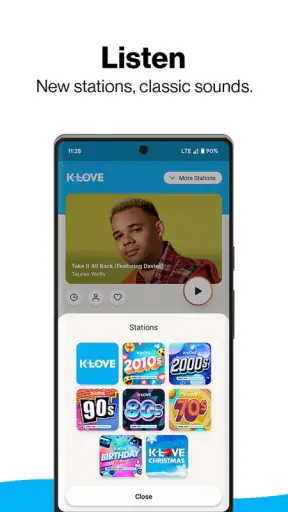
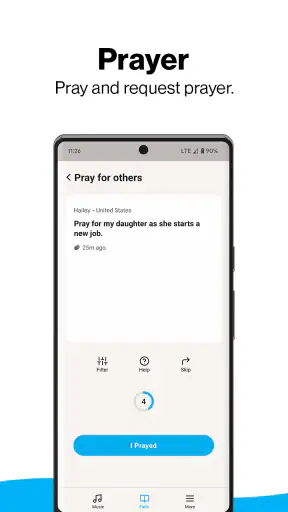
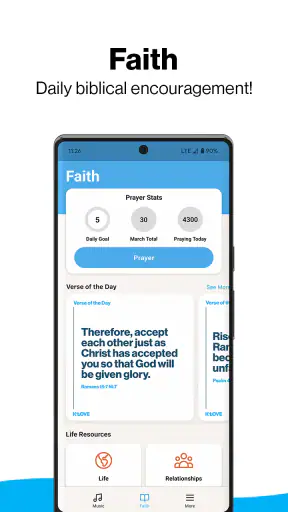
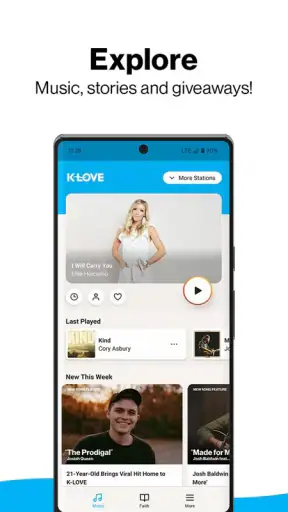
I spent time with K-LOVE as a straightforward way to keep a Christian radio station close at hand, and its appeal became clear very quickly: it removes the need to search through a general music service when I simply want K-LOVE. This is a free Music & Audio app from Educational Media Foundation, aimed at listeners who already enjoy the station and want a convenient mobile companion.
My overall impression is positive, but specific. I would recommend it to someone who wants a focused listening experience built around K-LOVE rather than a broad music library, artist discovery platform, or personalized streaming subscription. The app does one central job well: it gives the station a place on your phone, making it easier to listen during ordinary parts of the day.
What the app is really for
The store summary describes the idea simply: take K-LOVE with you wherever you go. In practice, that means this is not an app I would choose when I want to build a playlist from thousands of individual tracks. I see it more as a dedicated radio destination. I open it with an intention already in mind—listen to K-LOVE—and avoid the extra steps that come with navigating a general-purpose service.
That narrow focus is important. Apps such as Spotify, Apple Music, and YouTube Music are designed around catalogs, albums, playlists, recommendations, and on-demand discovery. K-LOVE serves a different habit. It suits the listener who prefers turning on a familiar station and letting the programming carry the session. If that sounds like your normal listening pattern, the simplicity is a strength rather than a missing feature.
The app is listed for Everyone, which matches its approachable purpose. It is also free, so there is no purchase decision before trying it. That makes the first step easy: install it, listen, and decide whether a station-centered experience fits your routine. I appreciate that distinction because “free” here is the verified access model; it should not be confused with the much larger paid catalogs offered by subscription music services.
Educational Media Foundation is the developer behind the app. It has been available since February 11, 2013, and the current Android version is 8.1.21, with Android 5.0 or later required. Those details make it accessible to people using older Android devices, although I would still keep the app updated when an update is offered so the listening experience remains compatible with the phone and operating system.
How it fits into everyday listening
A realistic use case is a morning routine. I can imagine opening K-LOVE while making breakfast, leaving the phone nearby, and allowing the station to provide continuous audio without spending time choosing every song. The same approach works during a commute, while tidying a room, or during a quiet afternoon when I want music and spoken programming without constructing a queue.
The important workflow is to treat it like a radio button, not a personal music locker. I would open it before starting another task, check that playback has begun, and then leave the phone alone. That reduces the temptation to keep browsing. For listeners who find large streaming catalogs distracting, this limited choice can actually make the app more useful.
There is also a practical benefit for people who already know what they want to hear. Instead of remembering an artist name, searching for a track, and deciding between versions, I can go directly to the station experience. The trade-off is equally clear: I give up control over the exact order and selection in exchange for a more relaxed, broadcast-style session.
What the free access means for value
K-LOVE is free to download and use, which gives it a strong advantage for casual listeners. Someone who only wants a Christian radio option on a phone does not need to commit to a paid music subscription simply to test the experience. That is especially useful for households where one person wants station listening but does not need a complete on-demand catalog.
I would judge its value by frequency of use rather than by the number of features. If I listen several times a week, the convenience of having a dedicated K-LOVE app can justify keeping it installed. If I open it only once in a while, the fact that it costs nothing makes that occasional use easy to justify. Either way, the financial risk is low because the app itself is free.
At the same time, free access does not make it a replacement for every kind of music service. A paid subscription may offer better value to someone who wants downloads, carefully organized personal playlists, album listening, or precise control over individual songs. Those are different needs. K-LOVE’s value comes from focused access to its station experience, not from matching the feature breadth of a full streaming catalog.
That is the key distinction I would explain to a friend: you are not choosing between this app and a paid service on identical terms. You are choosing between a focused radio companion and a broader music platform. For the former, free access is compelling. For the latter, another service may be worth paying for.
The listening trade-offs I noticed
The biggest limitation is also the most obvious consequence of the format: I cannot approach it as though it were an on-demand library. If I have a particular song in mind, a general music service is likely to be the better tool. K-LOVE makes more sense when I am happy to accept the station’s flow instead of controlling each selection.
That difference affects planning. For a workout where I need a specific tempo, or a gathering where I want a carefully arranged sequence, I would rather use a playlist I can prepare in advance. For background listening, the station format feels more natural. The right choice depends less on sound quality claims and more on how much control I want during a listening session.
Another trade-off is attention. A dedicated station app can be pleasantly uncomplicated, but it may not satisfy listeners who enjoy exploring related artists, comparing albums, or digging through recommendations. I would skip it if discovery is the main reason I use music apps. The experience is better suited to recognition, routine, and companionship than to deep catalog exploration.
There is also a habit-related limitation that is easy to overlook. When I use a general streaming app, I can often shape the next hour before pressing play. With a station, I need to accept that the experience is programmed rather than fully planned. That can be refreshing when I want fewer decisions, but frustrating when I need a predictable sequence.
Three practical ways to get more from it
First, I would use K-LOVE as a deliberate “start and step away” app. Instead of repeatedly checking the phone, I would begin playback at the start of a task and let the station fill the background. This is a better match for the app than treating it like a search engine for individual tracks.
Second, I would keep a separate note of songs or artists that catch my attention if I want to explore them later elsewhere. A station-based session is good for discovery by exposure, but a broad music service is usually better for returning to a specific track, building a collection, or comparing recordings. Separating those two jobs prevents disappointment.
Third, I would decide in advance whether I want variety or predictability. On days when I want familiar Christian radio programming with minimal interaction, K-LOVE is the sensible choice. On days when I need a precise mood, genre blend, or sequence, I would switch to a playlist-based alternative. This simple decision saves time and makes the app feel more intentional.
A fourth useful approach is to treat the app as a low-commitment test of your radio habits. Because it is free, I can use it for several normal routines rather than judging it after one brief launch. I would try it during a commute, at home, and while doing chores. If I keep returning without wishing for more control, it has found its place. If I immediately want albums or custom queues, that tells me a different category of app suits me better.
Who is most likely to appreciate it
I think K-LOVE is best for existing listeners who want a direct mobile route to the station. It is also a sensible option for someone who prefers continuous radio-style listening over choosing every track. The Everyone rating and free access make it approachable for a wide audience, while the focused design makes the intended use clear.
It may also work well for people who want their music choice to require very little effort. There is value in opening one familiar destination instead of comparing playlists, artists, and albums. During a busy morning, that reduction in decisions can matter more than a long feature list.
I would be more cautious about recommending it to a listener whose main priority is personal control. If you need to replay a favorite song on demand, arrange a detailed queue, download music for a specific situation, or explore a large catalog, look toward a full streaming platform instead. K-LOVE is not the app I would pick for those jobs.
Likewise, someone who rarely listens to Christian radio may not find enough reason to keep a dedicated station app installed. A broader audio service could cover more interests in one place. The free price removes the financial barrier, but it does not remove the question of whether the station’s programming matches your taste.
How it compares with usual alternatives
Compared with a terrestrial radio app, K-LOVE offers the convenience of having the station’s mobile destination ready on an Android phone. Compared with an on-demand service, it gives me less control but a more focused path to station listening. Neither comparison makes one option universally superior; they serve different listening behaviors.
General music services win when I want a personal library, detailed searches, albums, playlists, and repeatable selections. They also make more sense when I listen across many genres or want one app to handle several unrelated audio needs. Their wider scope can be useful, but it can also create more browsing and more choices than I want.
K-LOVE wins when the station itself is the destination. I do not need a large catalog to enjoy a session, and I do not need to spend time building the next hour. That focused identity is the app’s main advantage. It is also why I would not judge it by the same checklist I use for a premium music subscription.
Its audience response supports the idea that this focused approach has broad appeal: the app holds a 4.6 average from around twenty-two thousand ratings, with more than one million installs. Those figures do not guarantee that every listener will enjoy it, but they do suggest that the dedicated K-LOVE format works for a substantial Android audience.
My recommendation after using it
My recommendation is simple: try K-LOVE if you want free, focused Christian radio listening on your phone and are comfortable with a station-led experience. The app delivers value through convenience and routine, not through a huge collection of controls. I would keep it installed if I regularly wanted K-LOVE in the background and did not need to select every song.
I would skip it as a primary music app if my daily listening depends on custom playlists, exact track selection, album ownership, or broad discovery. In that situation, paying for a more comprehensive service may offer better value because it addresses needs this focused app is not designed to solve.
For me, the strongest reason to recommend it is the low-friction workflow: open it, start listening, and get on with the rest of the day. The main reason to hesitate is just as practical: listeners seeking control may quickly feel constrained. Once that trade-off is understood, the decision is easy.
K-LOVE is worth installing when the station is what you want—not merely one option among thousands. As a free Music & Audio app from Educational Media Foundation, it provides a clear, accessible way to bring that listening habit to Android. It is focused rather than expansive, and in this case that focus is exactly what makes it useful.


